
Ever wonder why native gardens of Australia look like lush and flower sanctuaries while other gardens look like a collection of woody sticks? The secret is not in the soil, it’s in the pruning Australian native plants.
For a long time, the myth continued that Aussie plants like to be alone. In reality, most species of the Grevillea require routine pruning. Routine pruning minimizes the grazing and fire cycle. This enables dense growth and an explosion of blooms. However, we believe that technique and timing are everything and a wrong cut and the wrong time of the year can result in a season without flowers or worse and a permanently damaged plant.
In this blog, we will explain the art of pruning Australian natives. You will learn about the techniques and top of pruning and deadheading, while avoiding common mistakes that can damage your plants.
Why Pruning Australian Natives Is Important
Pining is more than just cutting back the branches. It plays an important role in the health of the plant and growth. The Australian native plants benefit from pergola pruning because it:
Encourages Dense and Bushy Growth
Routine pinching and pruning focus plants to create multiple new stems, also back along the branch, rather than growing one long and sparsely leadered. This creates a thicker, denser and bushier habit. This is ideal for creating effective and lush screening plants.
More Flowers and Blooming Cycles
Purging is an important part of the growth of the flower, as it prevents seed capsule production and allows the development of the new and flower rich growth. By reducing old wood and promoting new tips, you can maximize the next flower blooming cycle and lead to a much richer and more vibrant collection of flowers.
Helps Maintain Shape and Size
Australian native plants often outgrow their space, so proactive pruning controls their form. This makes sure that they remain in scale with the landscape. It allows for shaping, training plants against the structure or helps in keeping the screeding shrubs tight and manageable. This complete method controls them from overgrowing or encroaching on paths and gardens.
Removes Dead or Diseased Wood
Cutting the dead, damaged and infected branches controls the reach of pathogens that can kill the plant. This helps in supporting the growth of the overall plant. Removing dead branches allows the plant to focus on growing new and healthy tissues, making the plant strong.
Light and Air Exposure
Pruning and thinning the dense internal branches increases the flow of air and reduces the risk of fungal diseases. It also improves sunlight penetration, which makes sure that inner leaves and lower branches receive the required light. This prevents them from dying and promotes a healthy and more productive plant from top to bottom.
When to Prune Australian Native Plants
The best time to do the pruning tasks of the Australian native plants is based on the species but most natives should be pruned after flowering. This allows the plant to heal quickly and prepare for the next cycle of growth.
Spring Season:
Spring is the perfect time for light pruning and shaping, which helps them from becoming leggy. It is suggested to avoid heavy pruning during early growth stages.
Summer Season:
Light trimming is good in the summer season but avoid heavy pruning during intense heat as it can stress the plant. This is also a good time to tip prune plants to prevent breaking during summer storms.
Autumn Season:
This is a suitable time for mild pruning. It is suggested to avoid late pruning in colder areas where frost may appear. It is an ideal time for shaping correas after their autumn flowering and cleaning up shrubs.
Winter Season:
It is time for minimal pruning it is suggested to only remove dead or damaged branches. Avoid heavy pruning if frost is possible, as this can damage new and tender growth.
How to Prune Australian Native Plants
Using the right techniques for pruning native trees and shrubs ensures healthy growth and prevents damage. Follow these steps for effective pruning:
1. Use the Right Tools
To make sure clean cuts and prevent tearing, always use the right tools for pruning and trimming. Use sharp and clean clippers for small stems and loppers or pruning saws for thicker branches.
2. Start with Dead or Diseased Wood
Always cut dead, dying, or diseased wood away first to healthy green tissue. This is an important issue that will allow circulation of air and prevent additional illness, which will immediately enhance the structural wellbeing of the plant, prior to any work on shaping the canopy.
3. Prune After Flowering
In the case of flowering natives, it is better to prune once flowering is over because this will not cut off flower buds of the next season. This time of the year will stimulate thick, bushy growth throughout the growing season and not over the winter, thus growing a healthier and stronger plant.
4. Avoid Cutting into Old Wood
Do not cut back into thick, old stems which lack visible growth of green, because many Australian natives do not regenerate in old wood. Rather, cut younger and gentler stems to promote a bushier habit without jeopardising the wellbeing of the plant.
5. Maintain Natural Shape
Intend to keep the natural form of the plant, not to trim it down to unnatural and hard contours. Light tip-pruning enhances interior density and flowering whilst preserving the special, casual beauty of native plants which helps to maintain the plant vigorous and aesthetically pleasing with time.
Pruning Techniques for Popular Australian Natives
There are numerous plants that need various methods and practices of pruning Australian native plants. These are some general guidelines.
Grevillea
Light tip pruning is preferable to maintain the plants green after every flowering flush. The trick to pruning grevillea is to leave the shrub to a healthy leaf node otherwise it will grow into a woody legginess that you find in old, unattended native shrubs.
Bottlebrush (Callistemon)
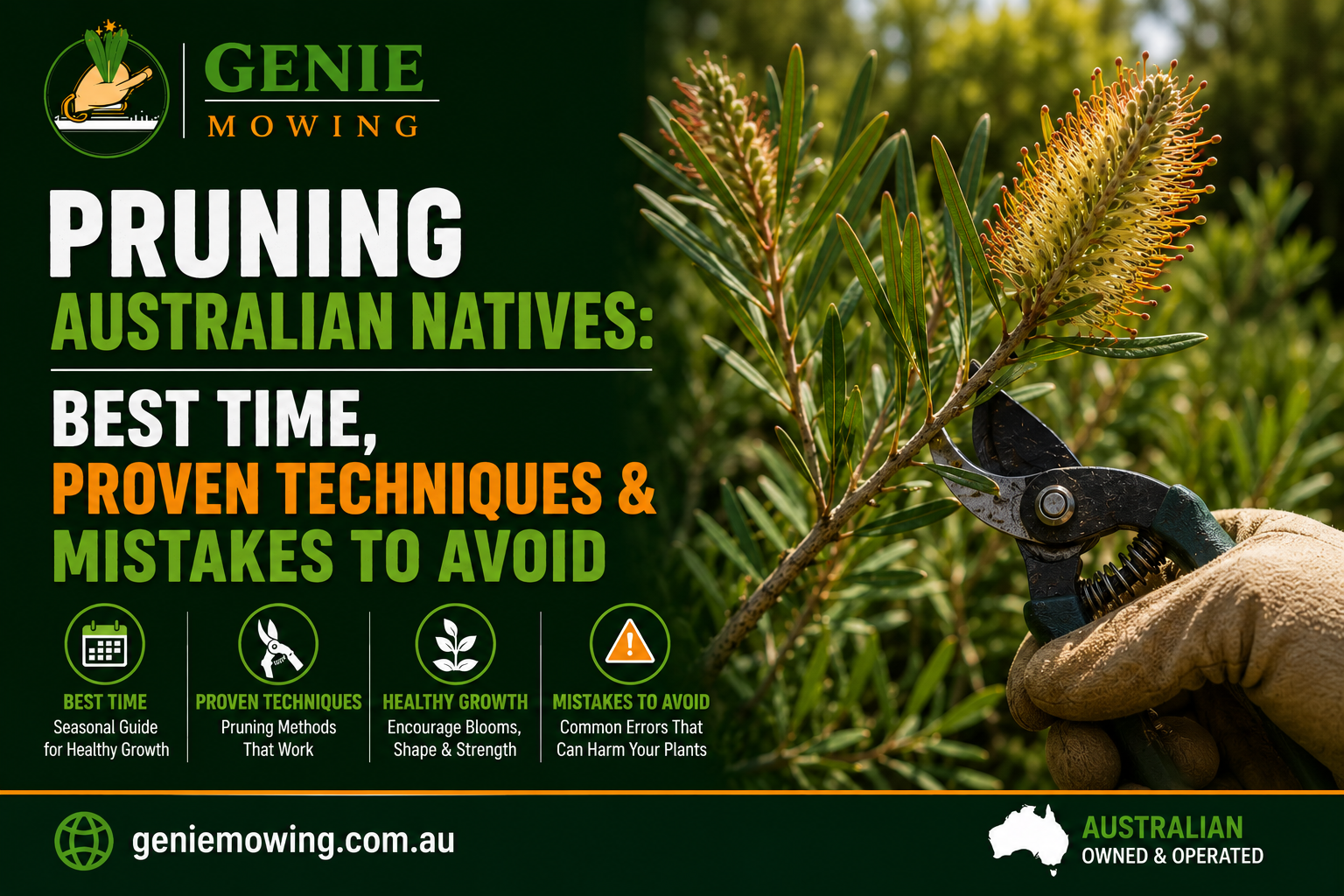
Knowing when to prune bottlebrush is vital; do it immediately after the flowers fade. Cut the stems just behind the spent flower spikes. This encourages a burst of new growth and ensures a spectacular, dense display of blooms next season.
Native Shrubs
The native shaping Australian shrubs are general and are not hacked but pruned. Pay attention to the 3 Ds, dead, damaged, or diseased wood. This selective thinning enhances airflow and ensures a natural, balanced form and encourages the long term plant health.
Common Mistakes to Avoid When Pruning
Even experienced gardeners can make native plant maintenance mistakes. Avoid these common pruning errors:
Over-Pruning
Cutting off over a third of the foliage of a plant simultaneously puts it under stress, impairs its production of food by photosynthesis. This stimulates feeble, gangling growth and welcomes the pests, diseases or even death.
Pruning at the Wrong Time
Winter pruning of the spring flowering shrubs removes the buds and late summer pruning encourages the growth which will be killed by winter frosts. Prune spring flower once flowered and dormant vegetation during late winter.
Using Dull Tools
Dull shears cut, squash, or bruise branches instead of cutting them clean, leaving jagged edges which are readily infected by disease and insects. Sharp and clean tools should be used and must be disinfected to avoid spreading pathogens.
Cutting into Old Wood
The removal of old wood of shrubs which bear in only the wood of last year leaves a season without blooms. It should only be pruned to revive old, not young and flowering shrubs.
Ignoring Plant Type
Different plants are to be treated in different ways; the treatment of the shrubs as trees leads to wrong structural development. There are always special requirements of pruning habits, growth rate and hardiness of the flowering plants, it is best to find out to guarantee long life and maximum flowering.
How Often Should You Prune Australian Natives?
The frequency of pruning depends on the plant type and growth rate. Regular, light pruning is more effective than occasional heavy pruning. In general:
- Fast-growing shrubs benefit from light pruning several times a year
- Slow-growing plants require minimal pruning
- Flowering natives should be pruned after each bloom cycle
Benefits of Regular Pruning
Regular pruning is significant to maintain your garden spaces in good conditions. This total preventive care will save you damage, diseases and pests in your garden and will ensure that your plants remain strong and healthy all season long. Frequent pruning has long term benefits:
Healthier and Stronger Plants
Regular pruning removes dead, damaged, or diseased branches, preventing decay from spreading to healthy tissue. It directs the plant’s energy toward new, vigorous growth, resulting in stronger branches and improved overall structural integrity, ensuring long-term plant longevity.
Increased Flowering and Foliage Density
Pruning promotes the growth of new shoots and buds by eliminating nonproductive wood and old growth. This treatment forms a more bushy and thicker look and it also drastically raises the number of flowers and leaves.
Better Pest and Disease Resistance
The weeding of over grown branches opens up the canopy and increases the air flow and penetration of sunlight to the inner leaf. This decreases humidity, which leaves the environment dry and unfavourable to fungi and decreases the chances of pest infestation.
Improved Garden Aesthetics
Pruning is used to bring the shrubs and trees in a nice, tidy, and attractive look that they do not grow to be messy and uncontrollable. It enables the gardeners to regulate the size, guide the growth and produce beautiful and manicured buildings that add beauty to the whole landscape.
Tools You Need for Pruning
It is a difference to have the right tools. It is important to wash tools before and after use to avoid the spread of the disease. The list of the tools required includes:
- Secateurs for small branches
- Loppers for thicker stems
- Pruning saw for larger limbs
- Gloves for protection
Quick Pruning Tips for Beginners
- Start small, avoid removing too much at once
- Observe plant growth before cutting
- Focus on shaping rather than drastic changes
- Prune regularly for best results
- Learn the specific needs of each plant
Conclusion
The art of pruning the Australian natives is the key to a plush, flowering and long lasting garden in the unique Australian climate. With the help of frequent, shallow pruning, like tip pruning post-flowering, you will avoid woody, leggy growth and promote vivid blooms. It is better not to make deep cuts on old wood, keep tools clean to avoid disease and do things in time so that your natives can not grow untidy.
We believe that for maintain the native plants it requires regular care and expert work to keep a native garden in its untouched state. For getting real results and professional services contact us. At Garden Darwin, we provide professional garden cleaning and maintenance within Darwin. We will have your landscape in good health and perfectly trimmed all year round. Don’t let your natives turn into a jungle. Call our professional team to the rescue today and be sure to keep your garden alive, green and attractive and refreshing all year round.
FAQ
What’s the safest time to prune native Australian trees?
The most safe and best time to pruning native trees and shrubs is right after their flowers bloom. This can be late winter to early spring for many species. This allows them to grow healthy and in good shape before the summer season starts.
How hard can you prune native plants?
It is completely based on the species of the plant. Some natives take hard pruning and others prefer light trimming. It is suggested to research the specific plant before cutting it.
Can you prune Australian natives in summer?
Yes, you can do light pruning in summer but avoid heavy pruning during extreme heat as it may give stress to the plant.
What happens if you don’t prune native plants?
Without pruning native plants can become thin, overgrown and create fewer flowers over time. For a perfectly maintained garden hire our expert team to handle pruning, trimming and cleaning stress free.
Do all Australian native plants need pruning?
No, all Australian native plants require regular pruning but most benefit from occasional trimming to maintain a good shape and enable healthy growth.